
Dublin Previous Residents by Era
One address produces several kinds of evidence. The Auditor identifies the present parcel and its tax-record details. The Recorder supplies the recorded title trail. Columbus Metropolitan Library adds annual directory and map evidence, while the Dublin Historical Society can add local family, neighborhood, and property context. None of these sources alone proves every person who lived at an address. Together, they make a defensible path for a house history or family-history question.
| Evidence source | Verified span | Where held | What it can establish |
|---|---|---|---|
| Franklin Recorder deed index | 1914 forward for deeds | Recorder public search | Recorded parties, dates, instruments, and legal descriptions. |
| Recorder archive index | 1804-1913 | Historic grantor/grantee route | Earlier deed-index references and volume/page leads. |
| Columbus city directories | 1841 forward; street section from 1911 | CML Main Library and digitized collection | Annual address and occupant context where coverage fits. |
| Tax assessment lists | Most properties from 1920 | Auditor prior-history route | Assessment and ownership-context evidence. |
| Dublin Historical Society archives | Early 1800s to present | Catalog, digital material, appointment | Maps, papers, photos, oral histories, and local context. |
Start with the era you need. A recent question usually starts with the county parcel and deed chain. A much older question may need the archive index, a directory volume, map evidence, and an appointment-based local collection. Every result should keep its source, date, page or instrument reference, and the exact address form used.
Dublin Previous Residents Need County Routing
Dublin is not a one-county records jurisdiction. It extends principally through Franklin County and also includes Delaware and Union County areas. The City directs association researchers to the Recorder for the county where the property is located. Before tracing past residents, use Dubscovery to check County of Parcel Data, then use that county’s Auditor and Recorder. A Dublin post-office name does not choose the custodian.
The parcel number and legal description are the bridge from an address to recorded land records. In Franklin County, the Auditor is the address entry point because the Recorder does not index deeds by street address. For another county, repeat the routing and address search there rather than carrying a Franklin parcel number across the line. This small step prevents a convincing but wrong chain of prior owners.
Dublin Previous Residents Through Deeds
A chain of title is a succession of recorded transfers, not a list of everyone who occupied a property. For a Franklin County address, begin in the Auditor Address Search. Copy the parcel ID, situs address, legal description, transfer details, and current owner as displayed. Then take the legal description, parcel, party name, or date range to the Recorder. This avoids a failed street-name search at an office that does not use street address as an index value.
- Route the Dublin parcel to its county and open the county Auditor record.
- Record the present transfer, parcel number, legal description, and the buyer shown on the deed trail.
- Find that purchase instrument in the Recorder index. The buyer is the grantee on that purchase.
- Read the seller, then search that seller as grantee to locate the prior acquisition of the same land.
- Repeat backward, matching the legal description and prior references before treating two similar addresses as one property.
- Grantor
- The party conveying an interest in a recorded instrument.
- Grantee
- The party receiving the recorded interest in that instrument.
- Chain of title
- The sequence of recorded transfers linked by parties, legal description, and prior references.
- Legal description
- The lot, block, subdivision, or metes-and-bounds language that identifies land beyond a changing street address.
Use the Recorder’s Public Records Search for the Franklin route. If an instrument is unclear, unofficial online copies may be printed free, while certified copies can be requested online, by mail, or at the counter for the stated fee of $2 per page plus $1 certification per document, with postage when applicable.
Dublin Previous Residents and Recorder Eras
Franklin’s online methods change by date. Deeds in the modern index begin January 2, 1914, and the archive deed indexes cover 1804 through 1913. Mortgages begin in the modern index January 7, 1970. Documents recorded from May 15, 1997 use a 15-digit instrument number. Earlier record references can use microfiche or book, volume, and page. These labels are search directions, not interchangeable citations.
The older trail has a real local records story. Franklin County’s Recorder was created when the county was established, and the historic guide warns that some records were destroyed in the 1879 fire, though most were reconstructed. A difficult historic lookup can therefore reflect record history rather than a move. Use the grantor or grantee archive index, surname-page browsing, and cited volume/page. When the image or context is missing online, the counter and certified-copy request remain documented access channels.
Note: Preserve book, volume, page, microfiche, or instrument references exactly as shown because each belongs to a different recording era.
Dublin Previous Residents in Library Records
Directories add the household layer that deeds cannot supply. Columbus Metropolitan Library’s House History guide says Columbus city directories begin in 1841 and have a street-address section from 1911. The books are annual and can show an address and often an occupation, but the Library warns that a listed occupant is not necessarily the owner. Check the address’s historic geographic coverage before deciding that an absence has meaning.
The CML Local History and Genealogy service is the first help channel when a digital search has a gap. Main Library holds the physical directory run, Ohio census microfilm, maps, newspaper indexes, and local files. A public digital collection is useful, yet its directory digitization is still in progress, so a missing online year can still be on the shelf.
Columbus Metropolitan Library Local History and Genealogy is shown below as the starting point for directory, map, obituary, and house-history research.

Library staff and the physical collections can fill the gaps left by digitization, especially when the address falls near a changing municipal boundary.
CML’s digitized City Directory Collection provides the online directory route, including early Franklin County telephone directories.
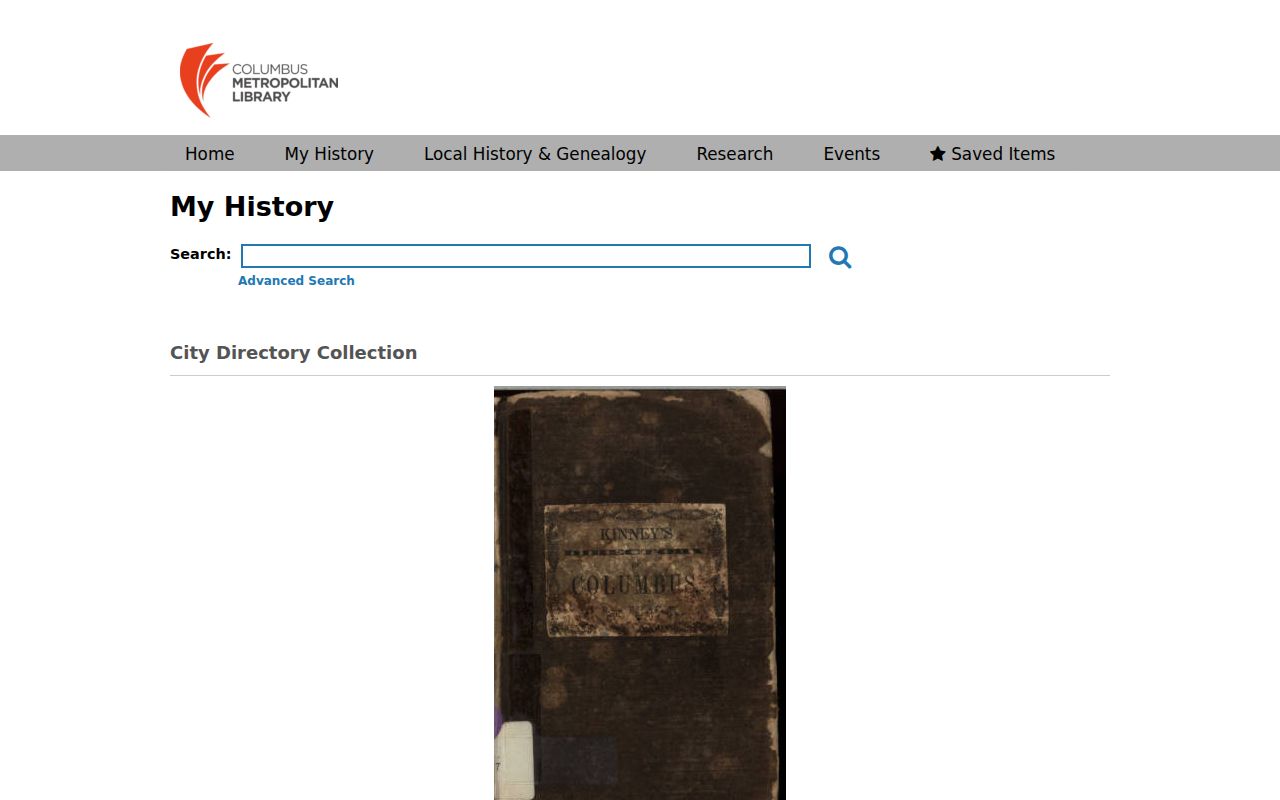
Use a digitized page as a dated historical observation, then compare it with adjacent years, the parcel trail, and maps before drawing a conclusion.
Dublin Previous Residents and Address Evidence
A dependable household trail pairs directory years with other dated sources. Begin with the present parcel and move into the most recent historic directory that may cover the address. From 1911 onward, check the street section first; before that, browse surname entries and nearby years. Compare the entry’s initials, address, occupation, and other printed notation with the alphabetical entry. A directory’s compilation date can differ from its publication year, so it is evidence for a period, not an exact move date.
- Copy the address as printed in the directory, including spelling, number, and locality.
- Move backward one year at a time until an address or name changes.
- Pair the directory find with the released federal census nearest in time, then test it against deed and map evidence.
- Use an obituary, newspaper index, or probate file only as a corroborating endpoint for a documented person.
Federal Census schedules are released after the 72-year restriction period. The currently public 1950 census can be useful, but the 1890 population schedules were largely destroyed in a 1921 fire. A missing 1890 result is a known national records gap, not proof that a Dublin household was absent.
The House History guide is the source shown below for the Library’s combined directory, map, assessment, census, and newspaper workflow.
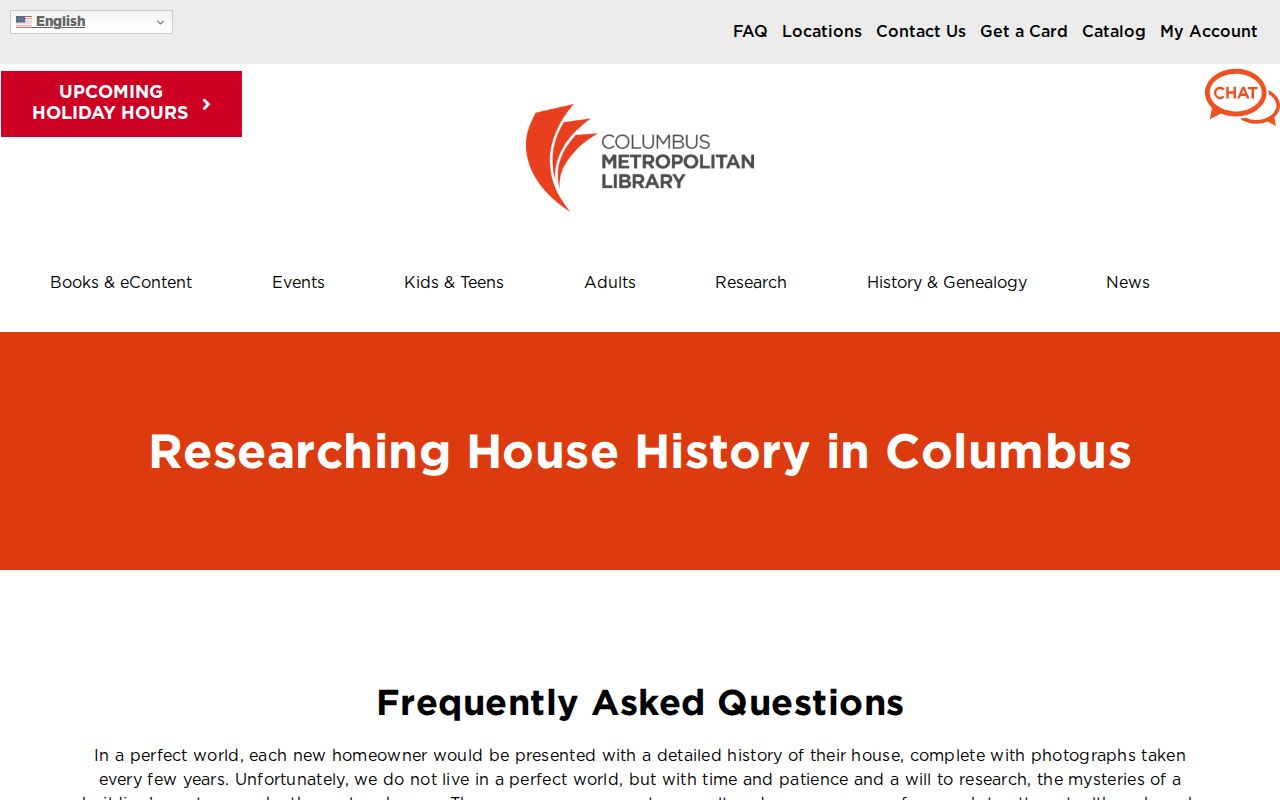
It reinforces the needed distinction: a recorded owner, an annual directory occupant, and a household in a census are separate observations that need to be checked together.
Dublin Previous Residents in Local Archives
Maps and archive material can explain why the paper trail changes. CML identifies Columbus Sanborn map dates of 1887, 1891, 1901, 1921, and 1921-51, along with regional atlases and a 1937 plat book. These are built-environment and street-continuity sources, not lists of people. Dubscovery also offers historic aerial and annexation layers. Use a recorded plat and legal description when an address has changed form.
For a Dublin-specific home, church, school, neighborhood, or family question, the Dublin Historical Society archives hold papers, correspondence, maps, property material, newspapers, yearbooks, photographs, and oral histories from the early 1800s to the present. Originals are off-site and require an appointment, normally with at least a week’s notice for the Thursday morning research period at the museum. Catalog and digital materials should be checked before scheduling.
Dublin Historical Society Archives provides the Dublin-specific source channel pictured here.
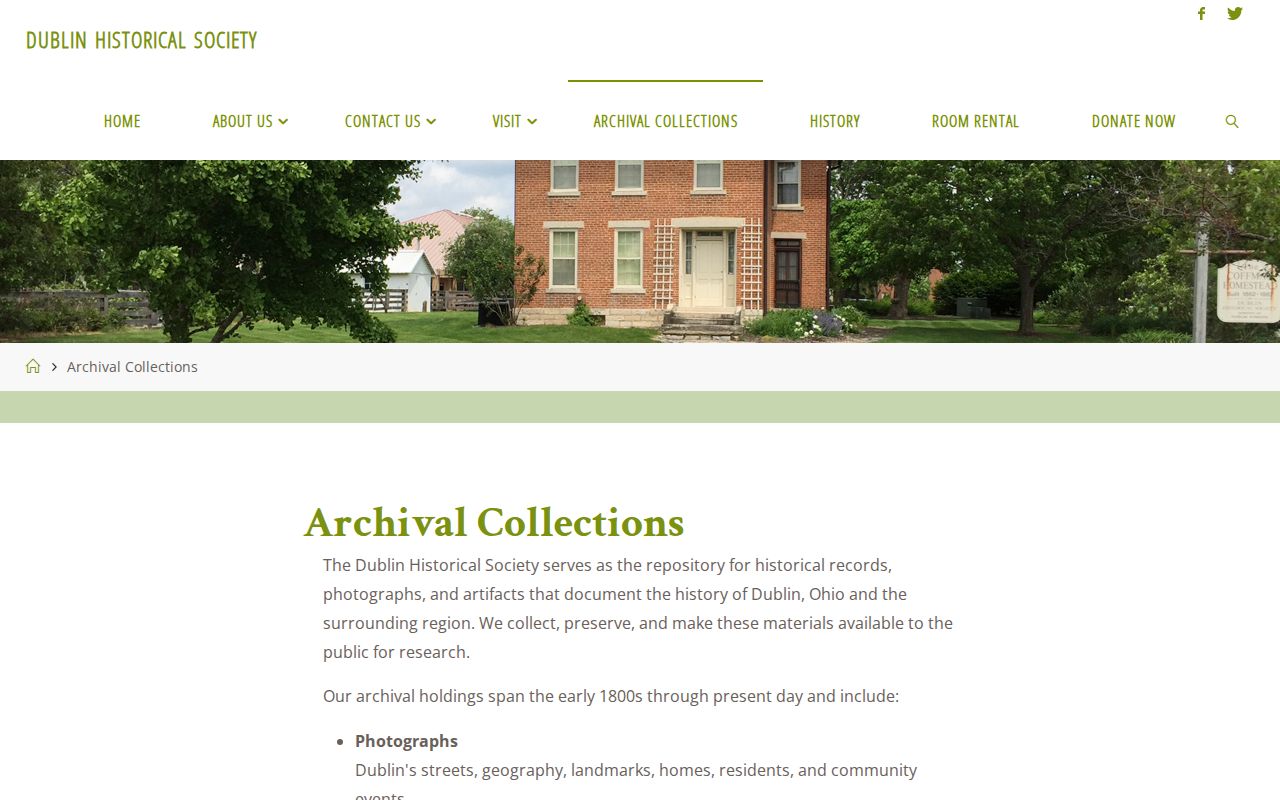
Archive material can add local context to a deed or directory finding, but it should not be used to turn a partial family record into a claim about every past resident.
Dublin Previous Residents: Careful Endpoints
Past residents research is strongest when it stays tied to a specific address, date, and source. A public cemetery database, obituary index, or Probate Court case can help explain a documented departure or estate, but a name match is only a lead. The Dublin cemetery resource can search for name and burial-location context, and CML’s newspaper and obituary sources supply another historical channel. Read every result with the property date and household evidence already gathered.
Use the Dublin city directory page for the collection-side details of historic directories. For an active street-level question, use current county property records rather than a decades-old book. Ohio Safe at Home protections, sealed court materials, and legally redacted records are limits to respect, not gaps to work around.
Lawful use. Dublin previous-resident research is suited to family history, estate questions, and a property’s documented past. Never use an address, map, directory, or record to stalk, harass, intimidate, or harm a person.